

BC3’s Climate Basis research advances the development of realistic and effective climate policies by advancing understanding of past and future climate changes. This is achieved through an integrated approach across four dimensions: field observation, mathematical theory, laboratory experiment, and transdisciplinary integration. By combining fieldwork, advanced modelling, laboratory research, and collaboration with social sciences, BC3 connects physical processes to human awareness and knowledge co-production.
Background
Understanding climate change requires analyzing historical and contemporary climate records from diverse natural archives like ice cores and tree rings. The Climate Basis topic focuses on vulnerable and extreme environments, which act as early-warning systems for climate shifts. By utilizing advanced climate models, researchers project future changes and inform effective climate policies, emphasizing the integration of past, present, and future insights into climate dynamics.
Research Interests
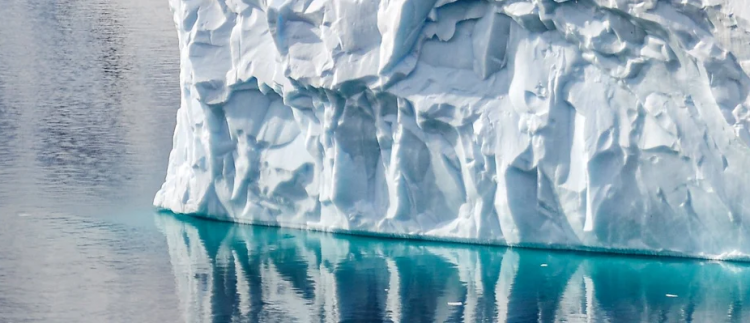
Key areas of interest include studying vulnerable and extreme environments, particularly the “Three Poles” (the Arctic, Antarctica, and the Hindu-Kush-Karakoram-Himalaya system) alongside the Pyrenees and Cantabrian Mountains, as early-warning systems for climate shifts and critical tipping points. A transdisciplinary approach combines data analysis, field studies, advanced climate modeling, and the integration of physical sciences with social sciences and traditional local knowledge. A major new focus is the “Securitization of the Three Poles,” projecting realistic future scenarios for these highly vulnerable areas as they become strategic sources of resources. Collaboration with global partners enhances our understanding of climate systems and supports sustainability.
Physical Sciences
Cómo llegar
- Cryosphere and Mountain Climate
